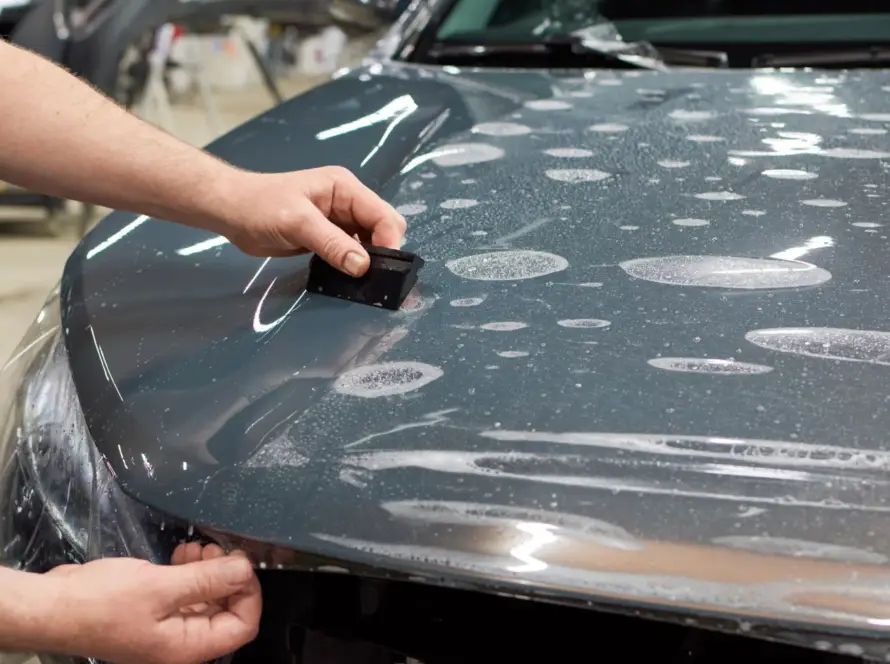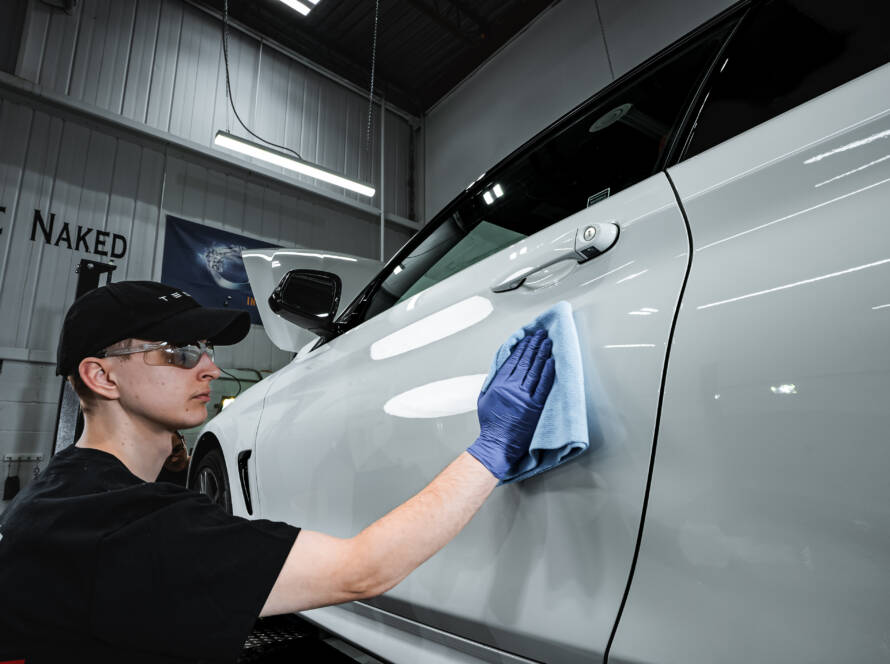
Your paint is the only part of your vehicle that is permanently exposed to everything the road throws at it. UV radiation, winter road salt, highway gravel, bird droppings, tree sap and a decade of car washes all attack the same few micrometers of clear coat. Vehicle paint protection exists because that clear coat is a consumable surface once it thins, etches or oxidises, the only fix is expensive. This guide breaks down what each protection option actually does, what it does not do, and how to choose the right one for how you drive.
Why Your Vehicle’s Paint Needs Protection
Modern factory clear coats are thinner than most owners assume, and they degrade from several directions at once.
UV exposure breaks down the resins in the clear coat, which is why horizontal panels roof, hood, trunk fade and chalk first. Road debris is the fastest form of damage: at highway speed, a small stone carries enough energy to punch through clear coat and base coat down to primer, and once moisture reaches that chip, corrosion starts. Winter conditions across the GTA add brine and salt spray that cling to lower panels and rocker areas for months.
Then there is the damage owners cause themselves. Bird droppings and tree sap are acidic and begin etching within hours in summer heat. Automatic brush washes are the single biggest source of the fine swirl marks that dull dark paint under direct sunlight.
None of this is dramatic on any given day. It is cumulative and it shows up as depreciation the moment your vehicle is appraised.
Paint Protection Film (PPF): The Invisible Shield
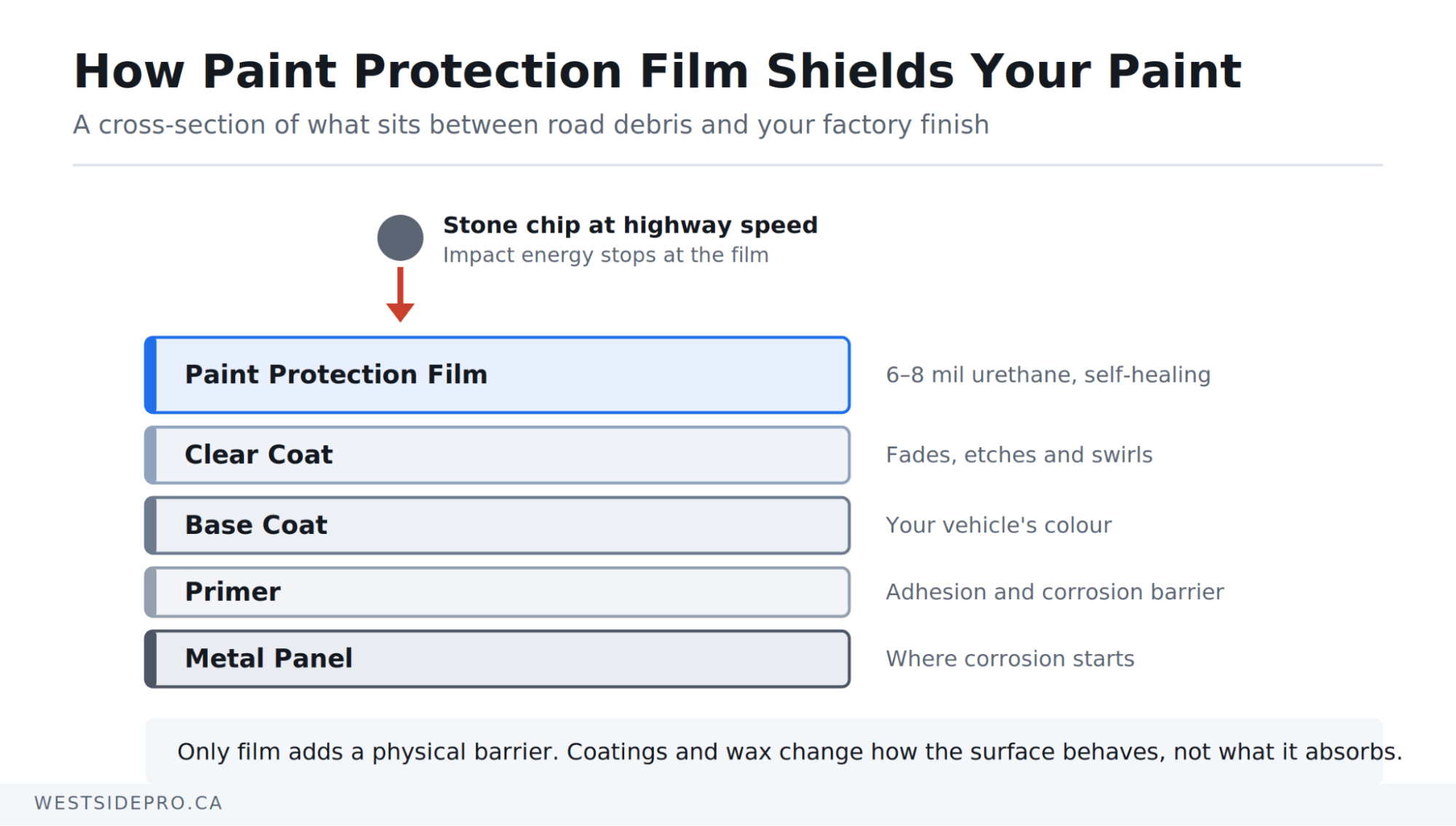
Paint protection film is a transparent thermoplastic urethane layer applied directly over your factory paint. It is the only option on this list that provides genuine physical impact protection, which is why it remains the premium choice for owners who plan to keep a vehicle long term.
Physical Impact Protection
PPF is typically 6–8 mil of urethane, and that thickness is doing real work. It absorbs and disperses the energy of stone strikes before they reach your clear coat, protecting against:
- Stone chips from gravel and highway debris on the hood, bumper and mirrors
- Light scratches from road grit, parking lot contact and brushing past the vehicle
- Door edge and handle wear from daily entry and exit
- Rocker panel sandblasting from tires kicking up road grit
This is the core difference between film and every coating: a coating changes how the surface behaves, but only film puts a physical barrier between your paint and the object hitting it.
How Self-Healing Technology Works
Quality PPF has an elastomeric top coat that reflows when it warms up. Light scratches and swirl marks in the film surface close and disappear with heat on a warm day, a bucket of hot water, or a heat gun in a shop setting.
Be clear on the limits: self-healing resolves surface-level marks in the film. It does not repair a deep gouge that has cut through the film, and it does not repair damage already present in the paint underneath. Prep matters film is applied over corrected paint, not as a way to hide existing defects.
Chemical and Environmental Resistance
Film also acts as a chemical barrier. Bird droppings, tree sap, road tar, bug acid and industrial fallout land on the film instead of your clear coat, so the etching that would have permanently marked your paint is absorbed by a replaceable layer. Combined with UV-stable construction, this is what keeps a filmed hood looking the same colour as the fenders five years in.
Invisible Finish and Gloss Options
Properly installed film is optically clear. It does not alter your factory colour, and modern edge-wrapped installations leave no visible seams on the panel face. You can also choose your finish: a high-gloss film enhances depth and reflection, while a satin film converts a glossy vehicle to a matte appearance without a respray.
Precision-Cut Coverage Options
Film is cut from vehicle-specific digital patterns, which means the blade never touches your paint. Coverage is modular, and most owners choose based on where impacts actually happen:
- Partial front: hood and fender leading edges, mirrors, bumper
- Full front: complete hood, fenders, bumper and mirrors the most popular option for highway drivers
- Track pack: full front plus rockers, A-pillars and roof leading edge
- Full body: every painted panel, for exotics and long-term keepers
If you are deciding where to spend, start with which areas of your car need PPF impact damage is highly concentrated on forward-facing surfaces.
How Long PPF Lasts
Premium film is warranted for up to 10 years against yellowing, cracking and peeling. Hitting that lifespan depends on washing it correctly, no pressure washing directly at film edges, no abrasive polishes, and no automatic brush washes. The full routine is covered in our guide on how to wash and care for your film.
Honest limitation: PPF is the most expensive protection on this list, and most owners apply it to high-impact panels rather than the entire vehicle. That is a legitimate strategy, not a compromise.
Not sure which coverage level fits your driving? Our team can walk you through options based on your commute and how long you plan to keep the vehicle.
Ceramic Coatings: Gloss, Hydrophobics and Easier Maintenance
A ceramic coating is a liquid polymer that cures into a hard, semi-permanent layer bonded to your paint. It does a completely different job from film: it changes how the surface behaves rather than shielding it from impact.
The Hydrophobic Effect
The headline benefit is water behaviour. Water beads tightly and sheets off the panel, carrying dirt with it. Contaminants struggle to bond to the slick surface, so dust, brake dust and road film rinse away with far less agitation. In practice, this cuts wash times significantly and reduces how often you need to touch the paint with a mitt, which is itself a scratch-prevention benefit.
UV and Oxidation Resistance
A coating sits between your clear coat and the sun, taking the UV load that would otherwise break down the resins in your paint. That is what prevents the fading, chalking and oxidation that typically appear first on roofs, hoods and trunk lids. On red and black vehicles especially, this is the difference between paint that still looks factory at year five and paint that looks tired.
Depth of Gloss and Colour Clarity
Coatings add a hard, optically clear layer that sharpens reflections and deepens colour. On dark paint the effect is obvious; reflections look wetter and more mirror-like. Because the coating is the sacrificial surface, that finish holds for years rather than the few weeks you get from wax.
What a Ceramic Coating Will Not Do
This is where most disappointment comes from, so it is worth stating plainly:
- It will not stop rock chips. The coating is microns thick. Only film provides impact protection.
- It will not make paint scratch-proof. It raises resistance to light marring; it does not eliminate it.
- It will not replace washing. Dirt still lands, it just releases more easily.
- It will not fix existing defects. A coating locks in the paint condition underneath it, which is why paint correction is done before application, not after.
For the full breakdown of what a coating delivers day to day, see our post on the benefits of ceramic coating.
Wax and Paint Sealants: The Traditional Approach
Wax and synthetic sealants are the entry point to paint protection, and they still have a place.
Carnauba wax delivers a warm, deep glow and typically lasts four to eight weeks depending on climate and wash frequency. Synthetic sealants trade some of that warmth for durability, holding four to six months with better chemical resistance.
Both are inexpensive, easy to apply at home, and require no professional prep. The trade-off is time you are reapplying several times a year, and protection degrades continuously between applications rather than holding steady.
Wax makes sense for older vehicles, budget-conscious owners, and enthusiasts who genuinely enjoy the process. If you are weighing the upgrade, our comparison of wax and sealant vs ceramic coating covers the cost-per-year maths in detail.
PPF vs Ceramic Coating vs Wax: Quick Comparison
Different products solve different problems. This table shows where each one actually earns its cost.
|
Paint Protection Film |
Ceramic Coating |
Wax / Sealant |
|
|---|---|---|---|
|
Guards against |
Stone chips, scratches, chemical etching |
UV, oxidation, chemical etching, light marring |
Light contaminants, UV (limited) |
|
Impact protection |
Yes |
No |
No |
|
Lifespan |
7–10 years |
2–5 years |
1–6 months |
|
Gloss impact |
Adds gloss or satin finish |
Significant gloss and depth |
Warm short-term shine |
|
Maintenance effort |
Low |
Very low |
High (frequent reapplication) |
|
Best for |
Highway drivers, new and long-term vehicles |
Owners wanting easy washing and lasting gloss |
Budget upkeep, older vehicles |
|
Relative cost |
High |
Moderate |
Low |
Can You Combine PPF and Ceramic Coating?
Yes and for most owners this is the strongest setup available.
The logic is simple. Film goes on the panels that take impacts: hood, fenders, bumper, mirrors and rocker areas. A ceramic coating then goes over the film and over the remaining painted panels. You end up with chip resistance where debris actually hits, and hydrophobic, UV-stable, easy-to-clean behaviour across the entire vehicle.
There is a practical benefit too: coated film is easier to keep clean, releases contamination faster, and maintains its clarity longer, since dirt and road film do not sit on the surface between washes.
How to Choose the Right Paint Protection for Your Vehicle
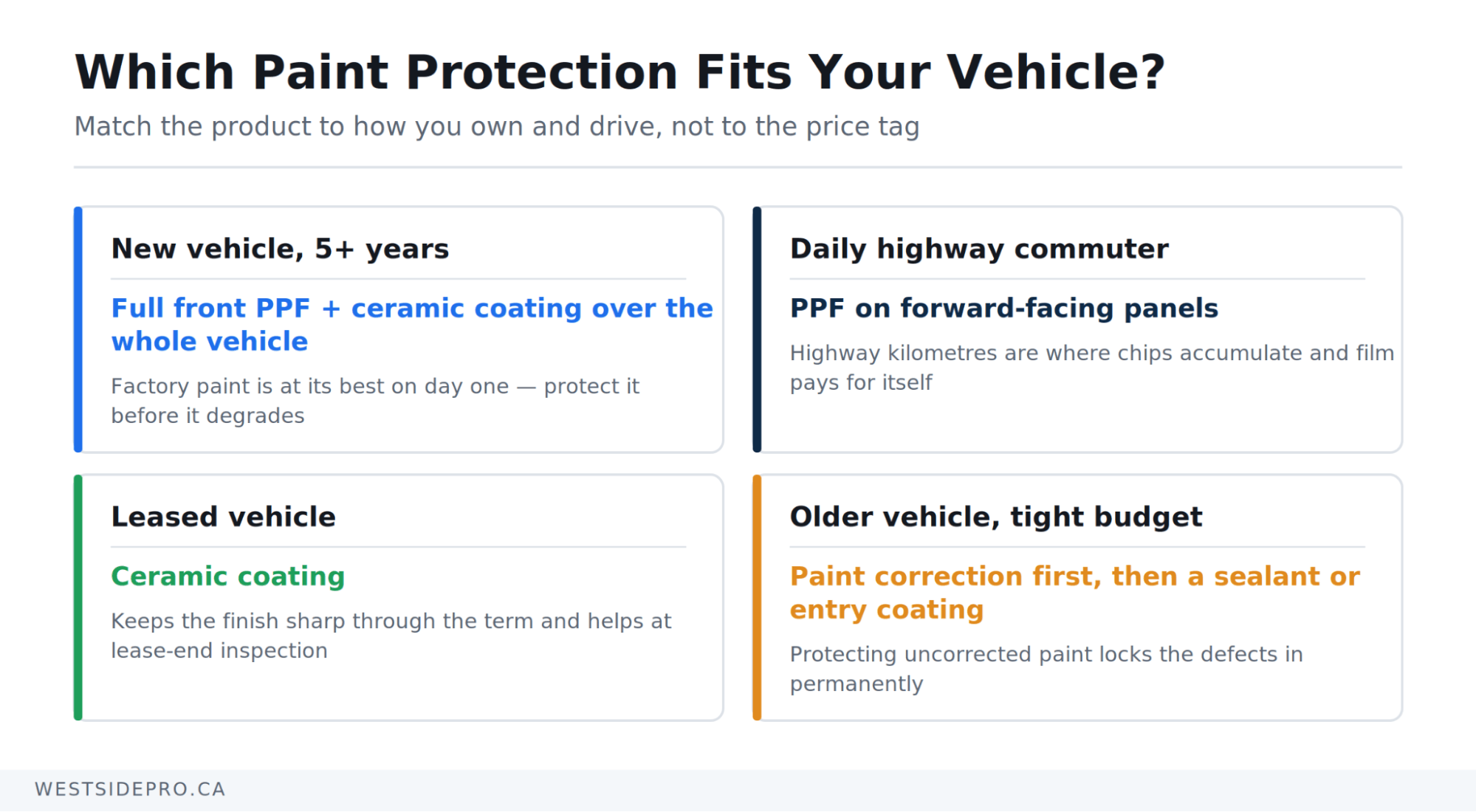
Match the product to your ownership situation rather than to the price tag.
New vehicle you plan to keep for 5+ years: Full front PPF plus a ceramic coating over the whole vehicle. You are protecting factory paint from day one, which is when it is in its best condition.
Daily highway commuter: Prioritise film on forward-facing panels. Highway kilometres are where chips accumulate, and this is where film pays for itself.
Leased vehicle: A ceramic coating is usually the smarter spend. It keeps the vehicle looking sharp through the term, protects against etching and fading, and helps at lease-end inspection without the cost of full film.
Older vehicle on a budget: Paint correction first, then a sealant or an entry-level coating. Protecting compromised paint before correcting it locks in the defects.
Maintaining Your Paint Protection
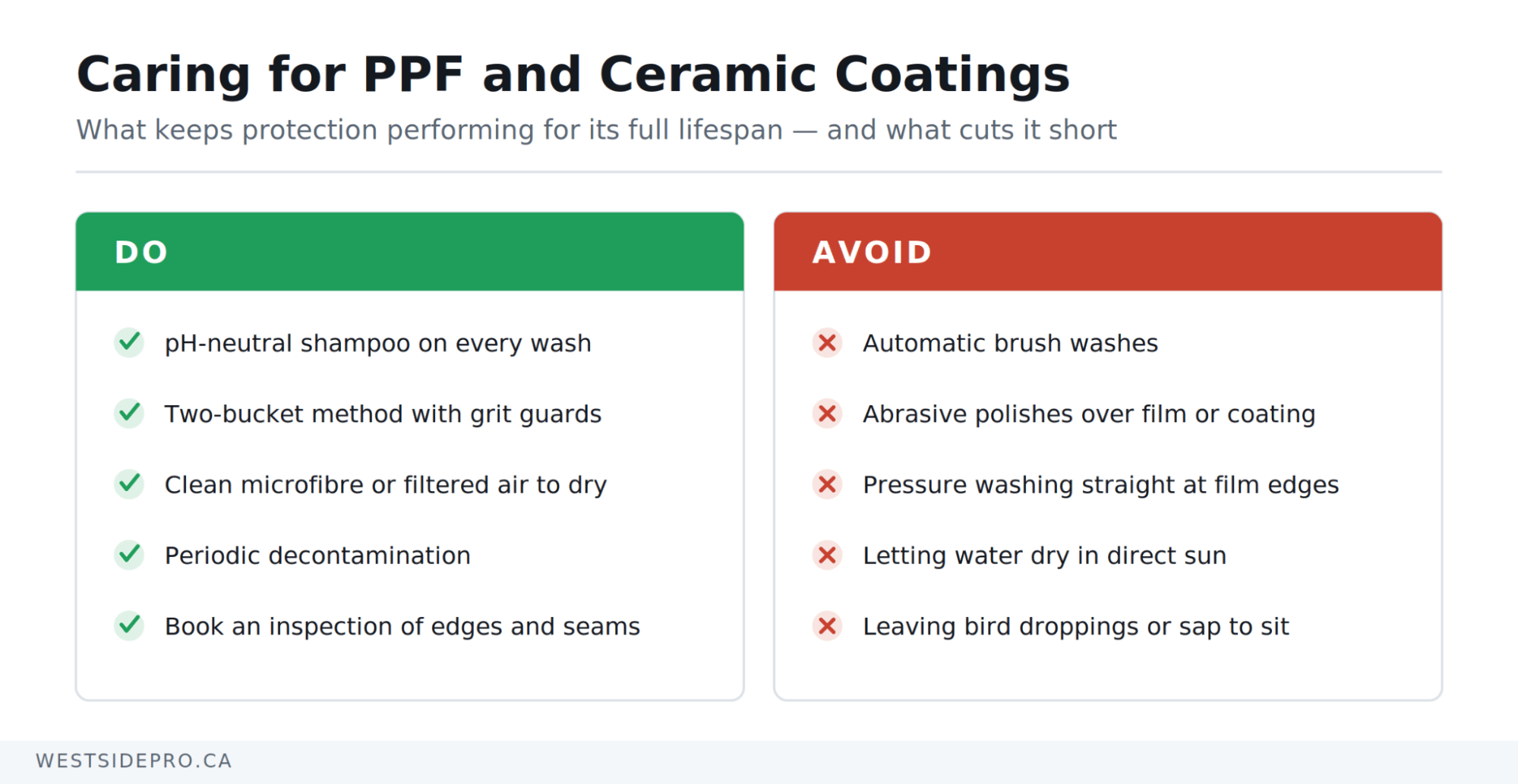
Protection products extend the life of your paint, but they still need correct care to reach their full lifespan.
- Use a pH-neutral shampoo. Aggressive degreasers strip coatings and dull film.
- Wash with the two-bucket method and grit guards to keep contamination off your mitt.
- Avoid automatic brush washes entirely. They are the fastest way to introduce swirls and lift film edges.
- Never use abrasive polishes or compounds over film or a coating unless a professional is correcting it.
- Dry with clean microfibre or filtered air rather than letting water spot in the sun.
- Decontaminate periodically and book an inspection so edges, seams and coating performance can be checked.
Detailed routines are in our guides on ceramic coating aftercare and PPF maintenance.
The Long-Term Value: Resale, Repair Costs and Peace of Mind
Paint protection is easiest to justify against what damage costs to fix. A single panel respray to correct chips and etching runs into the hundreds, a full paint correction is a multi-day job, and neither restores factory paint once it is resprayed, it is no longer original.
Vehicles with intact, unfaded, chip-free paint appraise higher and sell faster, particularly on darker colours where defects are obvious under showroom lighting. Protection also removes the low-grade stress of parking beside a shopping cart or following a gravel truck; the barrier takes the hit instead of your paint.
Why Choose WestSide Pro for Paint Protection
WestSide Pro installs premium XPEL paint protection film, backed by a 10-year warranty against yellowing, cracking and peeling. We use XPEL’s Design Access Program (DAP) software to cut vehicle-specific patterns, which means precision-fit coverage with minimal blade work and no risk to your factory paint.
Choose XPEL Ultimate for a high-gloss finish that enhances your paint’s depth, or XPEL Stealth for a satin transformation on gloss vehicles. Both offer self-healing technology, so light scratches and swirl marks disappear with heat.
Every installation is completed by certified installers who prep, correct and inspect the paint before a single panel is covered. If you are looking for a PPF installer in Mississauga or ceramic coating across the GTA, our team will build a protection plan around your vehicle and how you drive it.
Frequently Asked Questions
How much does vehicle paint protection cost?
Cost depends on coverage and vehicle size. Wax and sealants are the lowest cost, ceramic coatings sit in the middle, and PPF is the highest with partial front coverage costing considerably less than full body. We provide vehicle-specific quotes after inspecting your paint.
Is PPF or ceramic coating better?
Neither replaces the other. PPF protects against physical impact like stone chips; ceramic coating delivers hydrophobics, UV resistance and gloss. Most owners get the best result by applying film to high-impact panels and a coating over everything.
Does paint protection film damage your paint when removed?
Professionally installed and removed film should not damage factory paint. Problems occur with low-quality film, aged film left well past its lifespan, or removal without proper heat and technique.
Can paint protection be applied to a used car?
Yes, but the paint must be decontaminated and corrected first. Both film and coatings lock in the surface condition beneath them, so any existing swirls or etching should be removed before application.
How long does a ceramic coating last?
A professionally applied ceramic coating typically lasts two to five years depending on the product, preparation quality and how the vehicle is washed and stored. Correct maintenance washing is the biggest factor in reaching the upper end of that range.
Protect Your Investment
Choosing vehicle paint protection comes down to one question: are you protecting against impact, against the environment, or both? Film handles the first, coatings handle the second, and combining them covers everything while wax remains a reasonable budget option for older vehicles.
Book a consultation with WestSide Pro and we will assess your paint, walk you through coverage options, and build a protection plan that suits your vehicle and your driving. Protect your investment and drive with confidence.