Complete PPF Maintenance Guide: How to Wash and Care for Your Film
Paint protection film is one of the smartest investments you can make in your vehicle’s finish. It absorbs stone chips, road debris, light scratches, and UV damage before your paint ever sees them. But the film only performs as well as the care it gets. Poor washing habits, the wrong chemicals, or a neglected stain can dull a premium film in a single season.
This complete PPF maintenance guide covers exactly how to wash, dry, decontaminate, and protect paint protection film so it stays clear, glossy, and effective for years. Whether your car was wrapped last week or three winters ago, these are the practices that actually extend film life.
Key takeaways
- Wait 48–72 hours before the first gentle hand wash; allow up to 7 days for full adhesive cure.
- Hand wash every 1–2 weeks using the two-bucket method and a pH-neutral, wax-free shampoo.
- Remove bugs, sap, and bird droppings within 24–48 hours to prevent permanent staining.
- Keep pressure washer nozzles at least 12 inches away and never aim directly at film edges.
- Well-maintained quality PPF lasts 5–10 years; neglected film can fail in 2–3.
What Is Paint Protection Film and Why Maintenance Matters
Paint protection film is a transparent, self-healing urethane layer applied over your vehicle’s painted panels. It acts as a sacrificial shield, taking the impact of road debris, minor abrasions, chemical fallout, and UV exposure so your factory paint stays untouched underneath.
Quality film is genuinely low maintenance but low maintenance is not no maintenance. Harsh detergents strip its topcoat. Abrasive washing creates micro-marring that the self-healing layer can no longer fully recover from. Contaminants left sitting on the surface etch into the urethane and stain it permanently. Once that damage sets in, the only fix is replacement.
Consistent PPF maintenance protects:
- Long-term impact and chip protection
- Optical clarity and gloss across every panel
- Resistance to yellowing, staining, and edge contamination
- The full return on what you paid for the installation
How Long to Wait Before Washing New PPF
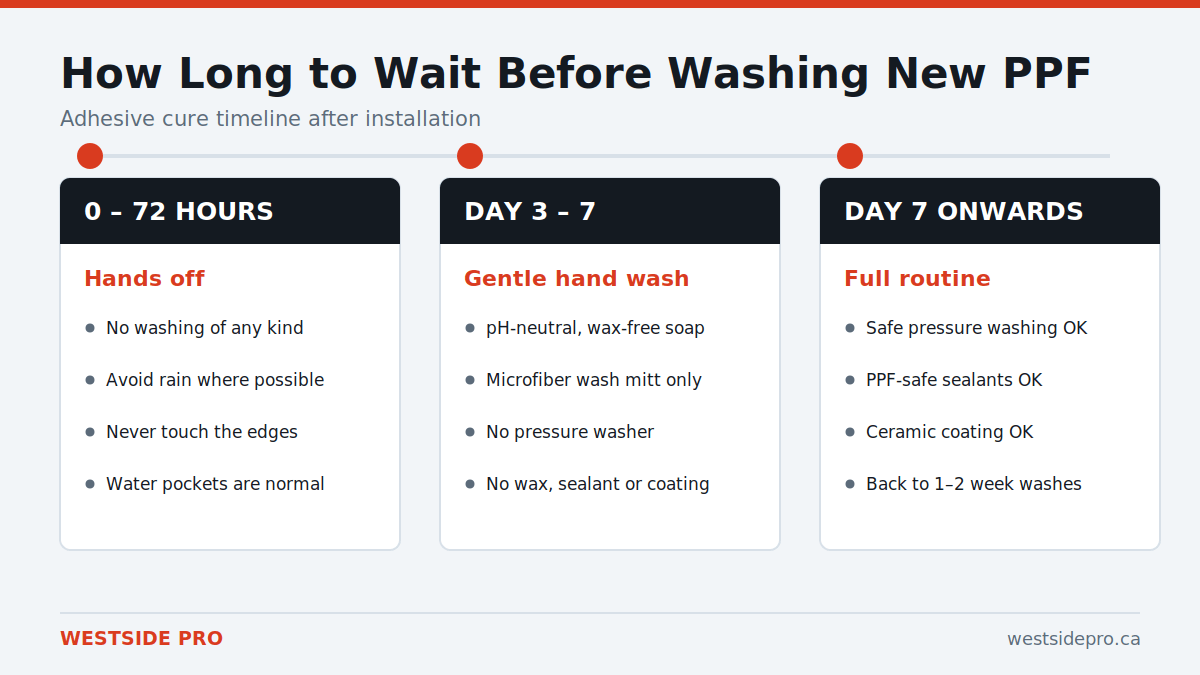
Freshly installed film needs time for the adhesive to fully bond to your paint. Washing too early especially with pressure or chemicals is the single most common cause of edge lifting on new installs.
The safest approach is tiered rather than a single number:
| Timeframe | What’s safe | What to avoid |
|---|---|---|
| First 48–72 hours | Nothing leave the vehicle alone. Small water pockets under the film are normal and evaporate on their own. | All washing, rain exposure where avoidable, touching or pressing edges |
| Day 3 to day 7 | Gentle hand rinse and light hand wash with pH-neutral shampoo | Pressure washing, waxes, sealants, ceramic coatings, automatic washes |
| After day 7 | Full normal maintenance routine, including safe pressure washing and PPF-compatible sealants | Nothing beyond the standard rules below |
During the first week, inspect the edges of the film after each rinse. Edges should sit flush against the paint with no lifting, bubbling, or dirt line forming underneath. Never pick at, peel back, or press repeatedly on an edge that looks slightly raised, flag it to your installer instead. Most reputable shops, including our team, will correct edge issues under warranty if they’re caught early.
How to Wash a Car with Paint Protection Film
Washing PPF is not harder than washing paint, it’s just less forgiving of shortcuts. The goal every time is to lift dirt away from the surface rather than dragging it across the film.
Use the Two-Bucket Wash Method
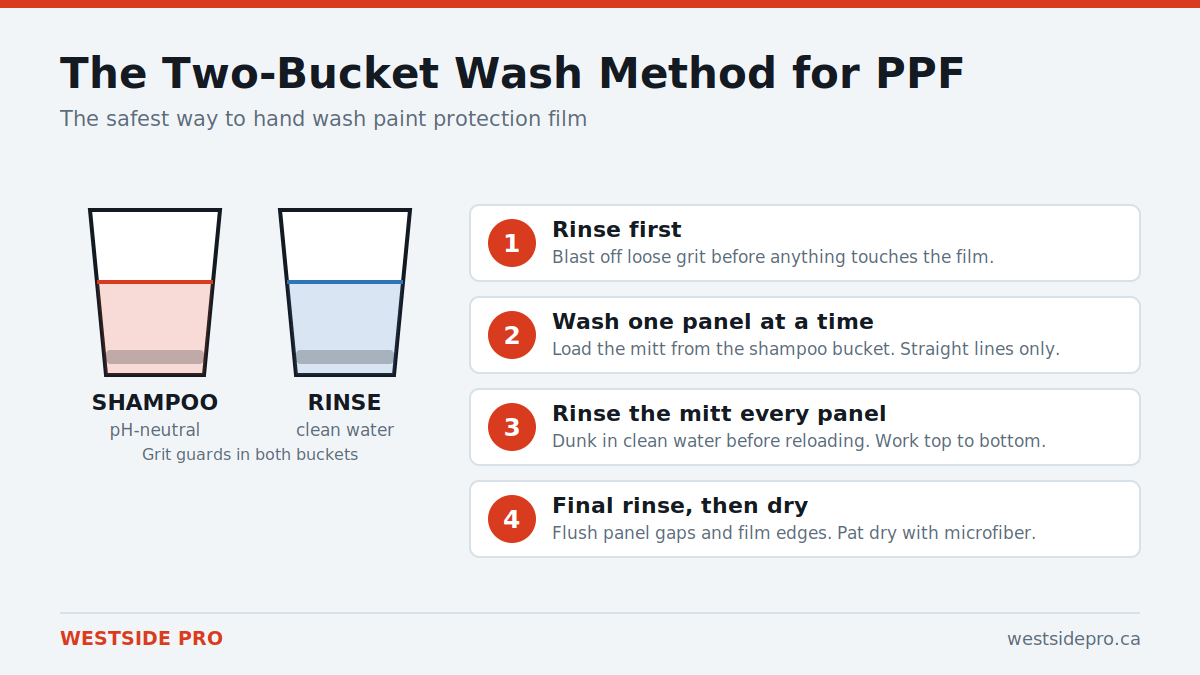
The two-bucket method is the standard for a reason: it keeps the grit you’ve just removed from going back onto the car. Fill one bucket with pH-neutral shampoo solution and the second with clean rinse water, ideally with grit guards in both.
- Rinse the entire vehicle first. This removes loose dirt and grit before anything physically touches the film, the step that prevents most swirl marks.
- Load your microfiber mitt from the shampoo bucket and wash one panel at a time using straight-line motions, never circles.
- Rinse the mitt in the clean-water bucket after every panel, then reload it with shampoo. Work top to bottom so dirty runoff never travels back over clean panels.
- Rinse the whole car thoroughly, paying attention to panel gaps and film edges where shampoo residue collects.
Wash every one to two weeks. Regular light washes are far gentler on film than occasional heavy scrubbing sessions.
Choose a PPF-Safe Car Shampoo
Shampoo choice matters more on film than on clear coat. Aggressive detergents strip the hydrophobic topcoat that keeps your PPF slick and easy to clean.
Look for:
- pH-neutral or pH-balanced formulas
- Products explicitly labelled safe for paint protection film, wraps, or ceramic coatings
- Wax-free, high-lubricity shampoos
Avoid:
- Dish soap and household detergents
- Degreasers and all-purpose cleaners used at full strength
- Anything solvent-heavy or labelled “heavy duty” for engine or wheel use
Pressure Washing PPF Safely
Pressure washing is fine on cured film; the danger is technique, not the tool itself. High-pressure water fired at an angle into a film edge can force its way under the adhesive and start a lift that spreads across the panel.
- Keep the nozzle a minimum of 12 inches from the surface
- Use a wide fan tip (40°) never a turbo, pencil, or zero-degree nozzle
- Stay under roughly 1,500–2,000 PSI at the surface
- Never spray directly at edges, seams, or wrapped corners. Aim across them, not into them
- Skip touchless washes that use strong alkaline pre-soaks, and avoid brush-style automatic washes entirely
How to Dry PPF Without Water Spots or Streaks
Drying is where a lot of otherwise careful owners undo their work. Letting a PPF-protected car air dry allows mineral deposits to bake onto the film, and hard-water spotting on urethane is stubborn to remove.
Use clean, plush microfiber drying towels and pat or blot the surface rather than dragging the towel across it. If you prefer a drying aid, use a PPF-safe quick detailer as lubrication never dries a panel completely bone-dry with friction alone.
Avoid chamois and leather-style water blades. They trap grit against the film and can leave streaks or fine scratching on the topcoat. Old bath towels, sponges, and shop rags are equally off-limits. A filtered final rinse or a dedicated car dryer/blower is the safest option of all, especially around mirrors, badges, and film edges where water hides and drips out later.
Removing Bugs, Tar, Sap, and Bird Droppings from PPF
Time matters more than technique here. Bird droppings, tree sap, bug splatter, and road tar are acidic or solvent-based, and in summer heat they can begin etching into the film within 24 to 48 hours. Once the urethane is etched, no cleaner reverses it.
What to do:
- Address the contaminant as soon as you spot it, do not wait for wash day
- Soften it first with a PPF-approved bug and tar remover or a warm damp microfiber laid over the spot for 30–60 seconds
- Wipe gently in one direction with plenty of lubrication
- Rinse the area and follow with a light hand wash to remove chemical residue
What never to do:
- Scrape with fingernails, plastic blades, or clay bars used dry
- Use solvent-heavy tar removers not rated for film or wraps
- Scrub hard at a dried-on deposit you’ll mar the film long before the deposit moves
- Leave a stain “for next weekend”
Keep a small kit in the trunk, a PPF-safe detail spray and two clean microfiber towels so you can deal with contamination the day it happens.
Can You Wax or Ceramic Coat Paint Protection Film?
Yes but only with products formulated for film. The wrong product will haze the surface, attack the topcoat, or leave residue trapped along the edges.
| Safe on PPF | Avoid on PPF |
|---|---|
| Ceramic coatings designed for film and wraps | Petroleum- or solvent-based paste waxes |
| PPF-compatible synthetic sealants | Abrasive polishes and cutting compounds |
| pH-neutral spray sealants and quick detailers | Cleaner-waxes with fillers or dyes |
| Silica-based (SiO₂) toppers rated for urethane | Anything containing kerosene, naphtha, or strong solvents |
A ceramic coating applied over PPF is the combination we recommend most often. It adds a slick hydrophobic layer that makes contaminants far easier to release, improves gloss, and reduces water spotting without interfering with the film’s self-healing ability. Apply it only after the film has fully cured, ideally as part of a professional service so coverage is even and edges are handled correctly.
How Self-Healing PPF Works and How to Activate It
Most modern films use a self-healing elastomeric topcoat. Light swirl marks and surface scratches that haven’t cut through the layer will close up on their own when heat is applied.
You can activate healing with:
- Direct sunlight on a warm day (the easiest method)
- A warm water rinse over the affected panel
- Ambient heat from a heated garage
Healing typically takes minutes in strong sun and longer in cold weather expect slower results through a Canadian winter. What you should not do is try to speed things up with a polisher. Compounding or aggressive machine polishing removes the self-healing topcoat permanently, and that damage cannot be undone. If a scratch is deep enough that heat doesn’t resolve it, have the panel assessed professionally.
PPF Maintenance Schedule: Weekly, Monthly, and Yearly
| Frequency | Task |
|---|---|
| Every 1–2 weeks | Two-bucket hand wash with pH-neutral shampoo; microfiber dry |
| As it happens | Remove bugs, sap, bird droppings, and tar within 24–48 hours |
| Monthly | Inspect all film edges, seams, and high-impact areas for lifting or contamination |
| Every 3–6 months | Top up your PPF-safe sealant or ceramic booster |
| Annually | Professional inspection, deep decontamination, and coating reapplication |
Stick to this and your maintenance stays a 30-minute job instead of a repair bill.
How Long Does Paint Protection Film Last with Proper Maintenance?
With consistent care, quality paint protection film lasts 5 to 10 years, and premium films backed by a manufacturer warranty can push beyond that in favourable conditions. Neglected film washed with the wrong products, run through brush washes, left with contaminants sitting on it can start yellowing or delaminating in as little as two to three years.
The variables that decide where you land:
- Film grade and manufacturer entry-level film simply doesn’t have the same topcoat chemistry
- Wash routine the single factor most within your control
- UV exposure daily street parking ages film faster than garage storage
- Climate and road conditions GTA winters are especially demanding, with road salt, brine, and grit accelerating wear along edges and lower panels
- Driving habits highway commuting means far more impact events than city driving
Winter deserves special attention here. Salt brine collects along film edges and wheel arches, so a rinse every one to two weeks through the cold months does more for film longevity than anything else on this list.
Professional PPF Care and Maintenance Services
Home washing handles the day-to-day. Professional maintenance handles what a wash mitt can’t reach and what an untrained eye won’t catch.
A professional PPF service typically includes:
- Deep decontamination of embedded industrial fallout and traffic film using film-safe chemistry
- Safe removal of stubborn tar, sap, and mineral deposits without marring the topcoat
- Full edge, seam, and corner inspection for early lifting or contamination lines
- Application or reapplication of a PPF-safe sealant or ceramic coating
- Assessment of high-impact zones front bumper, hood leading edge, mirrors, rocker panels
Catching a lifting edge at three months is a five-minute correction. Catching it at eighteen months usually means re-wrapping the panel. That’s the real value of a scheduled inspection.
Keep Your PPF Looking New Book a Professional Inspection
Paint protection film does the hard work of protecting your car, but it needs the right care to keep doing it. Wash gently and regularly, dry properly, deal with contaminants fast, use only film-safe products, and inspect your edges. Those five habits account for almost everything that determines whether your film lasts three years or ten.
At Westside Pro, we handle professional paint protection film installation, PPF maintenance, and ceramic coating services built around real GTA driving conditions, salt, gravel, and all. Our technicians use film-approved products and controlled techniques that protect the investment you’ve already made.
Contact Westside Pro today to book a PPF maintenance service or schedule a professional film inspection.
FAQs About PPF Maintenance
How often should you wash a car with paint protection film?
Wash a PPF-protected car every one to two weeks using the two-bucket method and a pH-neutral shampoo. Frequent gentle washing prevents contaminants from bonding to the film and keeps the surface clear, glossy, and easier to clean over time.
Can you take a car with PPF through an automatic car wash?
Avoid brush-style automatic washes entirely; the bristles cause swirl marks and can catch film edges. Touchless washes are safer but often use strong alkaline pre-soaks that degrade the topcoat. Hand washing remains the safest option for paint protection film.
Can paint protection film be polished?
Light polishing should only ever be done by a professional using film-safe products. Aggressive machine polishing or compounding permanently removes the self-healing topcoat, which cannot be restored. In most cases, heat from sunlight resolves surface scratches without any polishing at all.
How do you remove water spots from PPF?
Treat fresh water spots with a PPF-safe detail spray and a soft microfiber towel. For mineral-etched spots, a dedicated water spot remover rated for film can help, but severe etching may need professional correction. Drying the car properly after every wash prevents the problem entirely.
Does paint protection film need special care products?
PPF doesn’t require exotic products, but it does require the right ones pH-neutral shampoos, film-safe sealants, and non-abrasive cleaners. Avoid petroleum-based waxes, abrasive polishes, and household detergents, all of which shorten film life and reduce clarity.