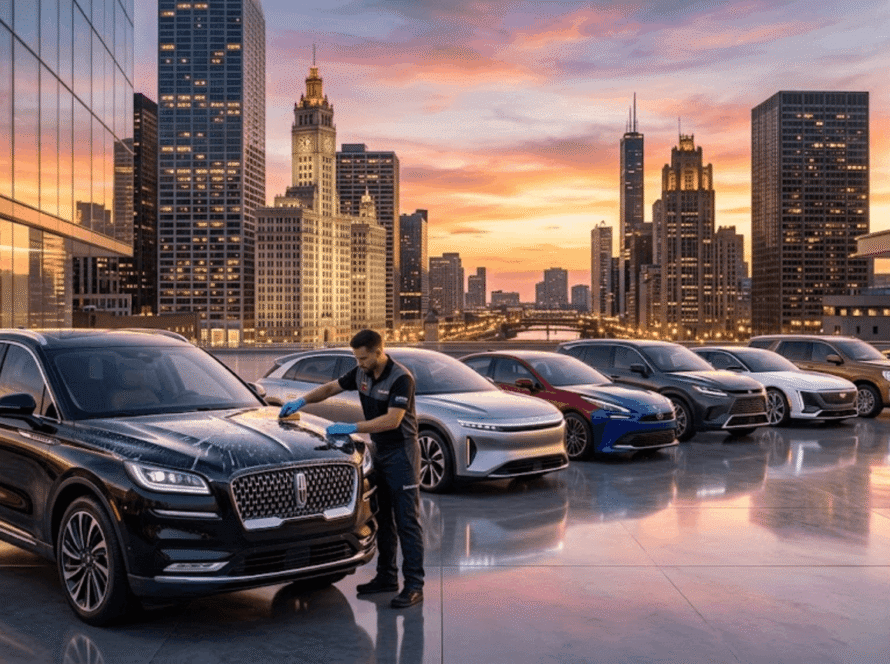
Window tinting is one of the few upgrades that pays you back every single day you drive. The benefits of window tint go well beyond a darker, sharper-looking vehicle quality film lowers cabin temperature, cuts glare, blocks the UV rays that fade your interior, and adds a layer of protection to the glass itself. Here’s exactly what a professional tint job delivers, and how to choose the right film for your car.
What Window Tint Actually Does
Automotive tint is a thin, multi-layer polyester film bonded to the inside surface of your glass. It doesn’t just darken the window, it filters specific parts of the light spectrum before they reach you.
Three numbers matter:
- VLT (Visible Light Transmission): the percentage of visible light the film lets through. A 35% tint passes 35% of light; a 5% “limo” tint passes almost none.
- IR rejection: how much infrared radiation the part of sunlight you feel as heat the film blocks. Premium ceramic films reject 60–90% of infrared.
- UV rejection: quality films block over 99% of ultraviolet light regardless of how dark they look.
That last point surprises most drivers: darkness and heat rejection are not the same thing. A cheap dark film can leave your cabin just as hot as clear glass, while a light ceramic film can dramatically reduce heat. This is why film quality matters far more than shade. For a deeper understanding of performance options, see choosing the right window tint for your car in Oakville.
1. A Noticeably Cooler, More Comfortable Cabin
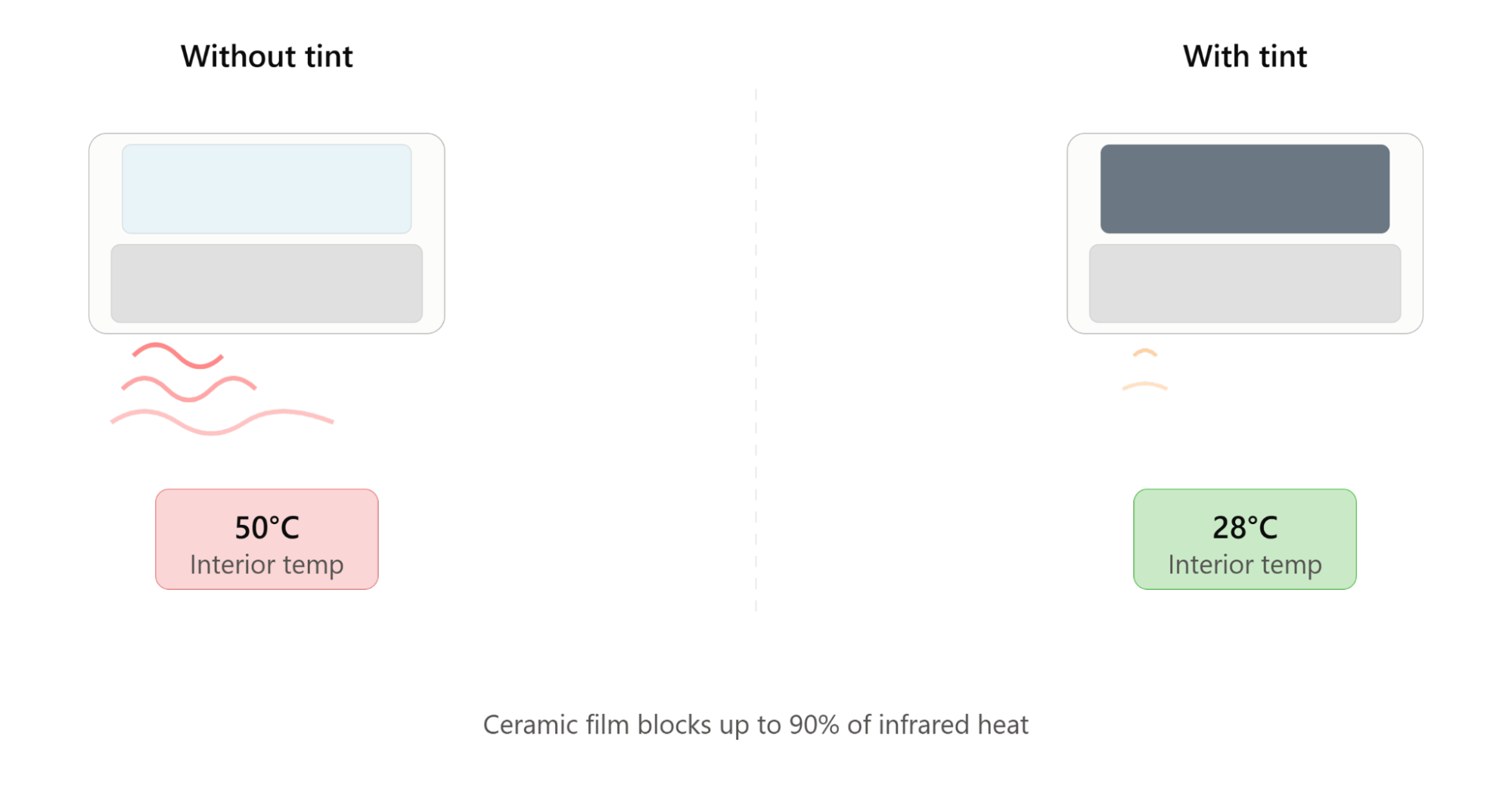
Comfort is the benefit drivers notice first. Tint film intercepts solar energy at the glass instead of letting it build up inside your vehicle, which keeps surfaces cooler and makes summer driving far more bearable.
Heat rejection
On a hot afternoon, an untinted car parked in direct sun can reach interior temperatures well above 50°C. Infrared-blocking film cuts a significant share of that heat load, so your cabin cools down faster after start-up and stays comfortable during the drive. Steering wheels, seat belt buckles and leather seats stay touchable instead of scalding.
Glare control
Low winter sun, wet pavement reflections and oncoming high beams all cause eye strain and momentary vision loss. Tint softens harsh light so you squint less and react faster, a real safety gain on early-morning and evening commutes.
UV protection and interior preservation
High-quality film blocks more than 99% of UVA and UVB rays. That protects your skin on long drives, and it protects everything inside the car. UV exposure is the main cause of faded dashboards, cracked leather, brittle plastic trim and discoloured upholstery. Blocking it keeps your interior looking newer for longer and directly supports resale value which means fewer replacement parts and repairs down the line. To extend protection further, consider pairing window tint with paint protection film to preserve your car’s shine for years.
2. A Cleaner, More Finished Look
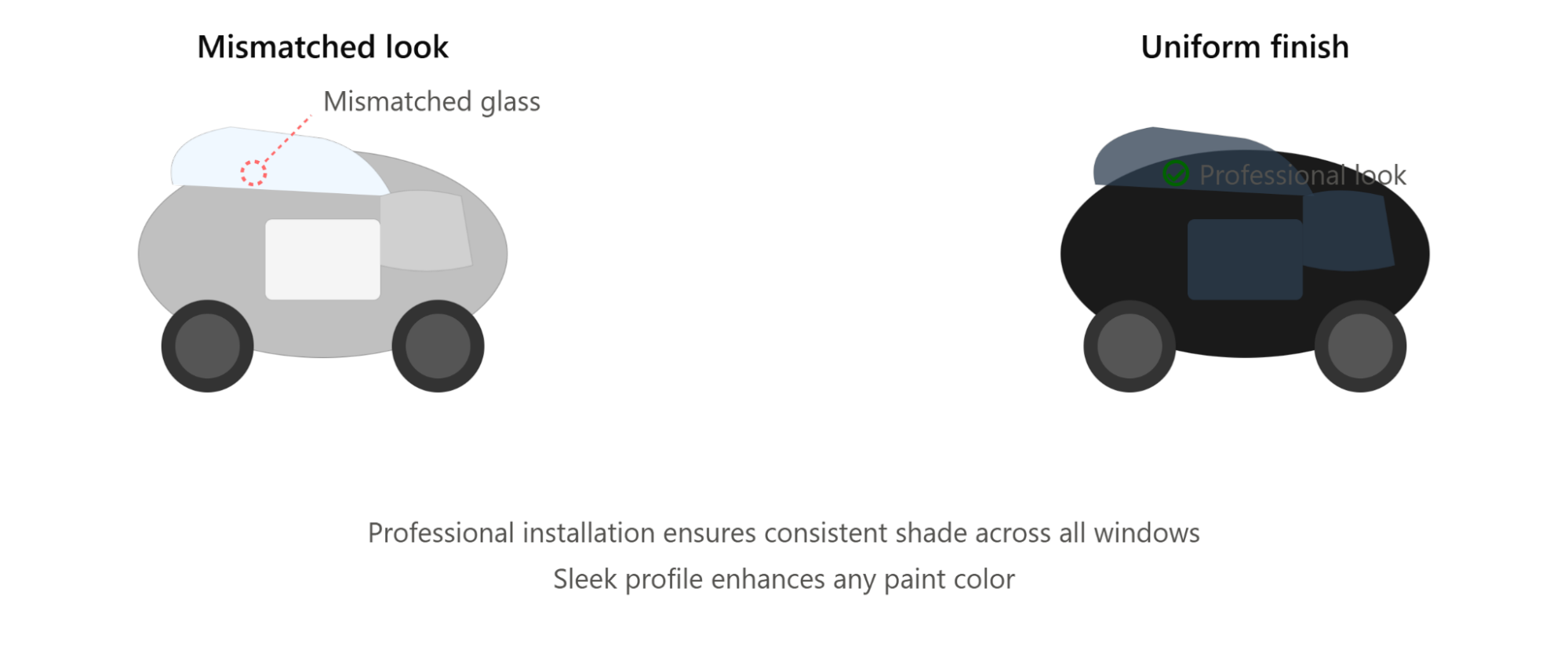
Tint is the most cost-effective styling change available. It gives glass a uniform, factory-finished appearance that flatters every paint colour, from white to black.
- Sleek profile: darker glass visually lowers and streamlines the vehicle’s silhouette.
- Shade options: films are available in a wide range of VLT levels, so you can choose subtle or bold while staying within the legal limits for your province.
- Consistency: professional installation matches every window, eliminating the mismatched look you get when factory privacy glass is only fitted to the rear.
The finish also lasts. Quality film is colour-stable, so it won’t turn purple or bubble the way budget dyed film does after a couple of Canadian summers.
3. Privacy and Theft Deterrence
Tinted windows make it much harder to see into your vehicle from the outside, which protects both your belongings and your peace of mind.
Most vehicle break-ins are opportunistic; a thief sees a bag, a laptop or a phone through the glass and takes the chance. Obscuring that view removes the trigger. In crowded parking lots, shopping centres and street parking, that added concealment is genuinely valuable.
Privacy matters while you’re driving, too. You get a more enclosed, personal space without the feeling of being on display in traffic, and passengers in the rear are shielded from view.
4. Added Safety in a Collision
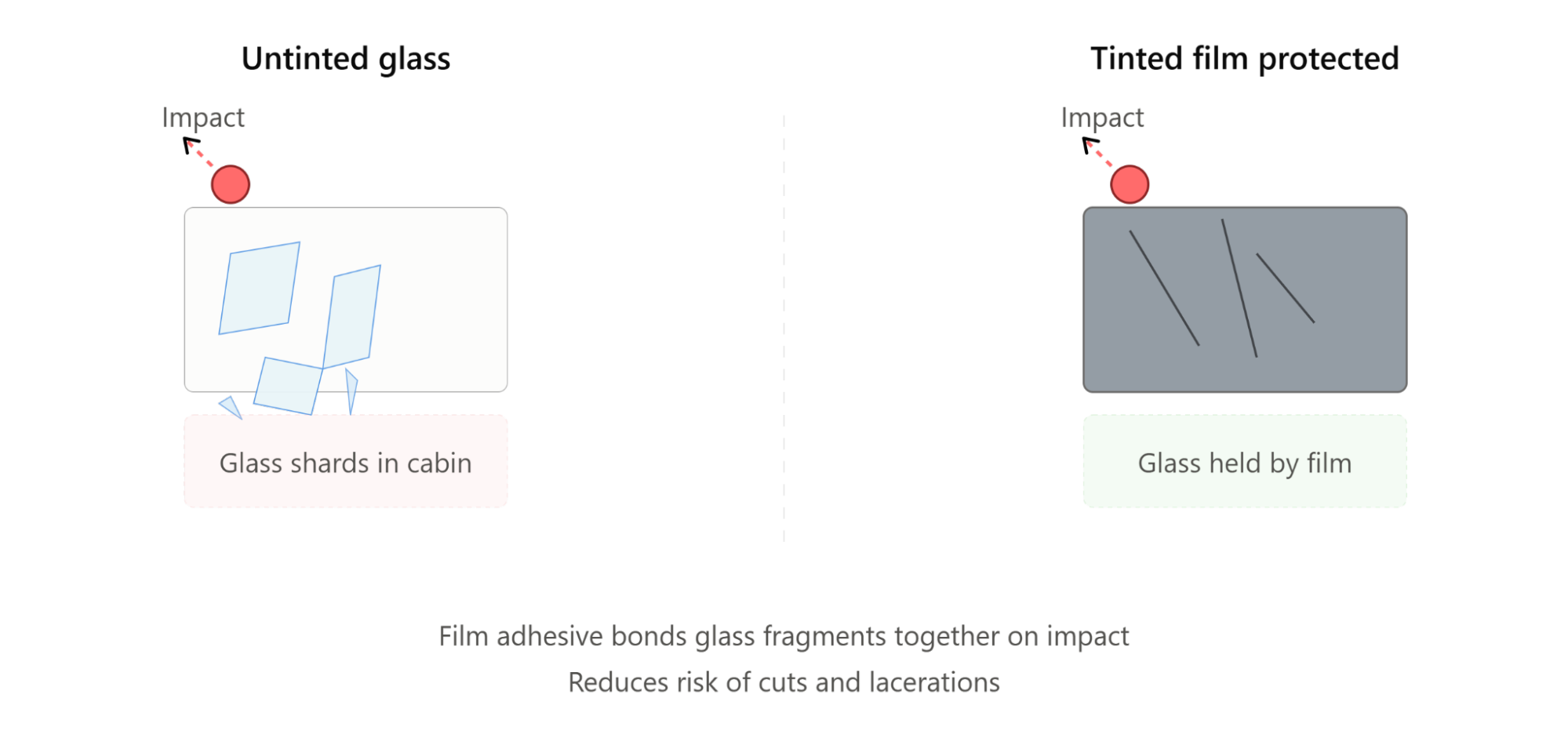
Window film is bonded across the entire glass surface, which changes how that glass behaves under impact.
- Shatter resistance: in a collision, the adhesive layer holds fragmented glass together instead of letting it spray into the cabin, reducing the risk of cuts and lacerations.
- Debris and scratch resistance: the film takes the abuse from road grit, minor scrapes and light impacts before your glass does.
- Break-in resistance: laminated film makes smash-and-grab attempts slower and noisier, which often deters them entirely.
None of this replaces safety glass but it’s meaningful protection you get as a side effect of a comfort upgrade.
5. Lower Fuel Use and a Smaller Environmental Footprint
A cooler cabin means your air conditioning works less. That’s not just comfort, it’s measurable energy savings.
Air conditioning is one of the biggest auxiliary loads on an engine, and running it hard in stop-and-go traffic increases fuel consumption noticeably. When tint reduces the heat entering your vehicle, the AC compressor cycles less often and at lower intensity, which lowers fuel use and the emissions that come with it. For EV drivers the effect is even more direct: less climate control demand means more of the battery goes toward range. Learn more about the environmental benefits of window tinting and paint protection.
The environmental benefits go further than fuel:
- Less waste: UV-protected interiors don’t need replacement dashboards, re-dyed leather or new trim panels, all of which carry a manufacturing footprint.
- Fewer chemicals: protected surfaces need less frequent deep cleaning and conditioning, reducing the volume of detergents and solvents that eventually reach the water system.
- Longer vehicle lifespan: a car that stays comfortable, clean and structurally sound inside stays on the road longer, which is always the greener outcome.
Pairing Tint With Paint Protection
Tint handles everything coming through the glass. The exterior needs its own defence.
Paint protection film is a clear urethane layer that absorbs rock chips, road debris and light scratches before they reach your paint. Ceramic coating adds a hydrophobic layer that repels water, dirt and contaminants, so the vehicle stays cleaner between washes.
Used together with tint, these treatments protect both halves of your vehicle from the same enemy sun, weather and road exposure. Fewer paint corrections, fewer repaints and fewer wash cycles means less chemical runoff and a car that holds its value longer. See our guide on ceramic coatings vs traditional wax for a detailed comparison.
Which Type of Window Tint Should You Choose?
Not all films perform the same. Here’s how the main options compare:
| Film type | Heat rejection | UV block | Lifespan | Best for |
|---|---|---|---|---|
| Dyed | Low | High | 2–4 years | Lowest upfront cost, appearance only |
| Metallized | Moderate | High | 5–8 years | Durability, but can interfere with signals |
| Carbon | Good | 99%+ | 7–10 years | Balanced performance, no signal issues |
| Ceramic | Excellent (up to 90% IR) | 99%+ | 10+ years | Maximum heat rejection and clarity |
Ceramic film costs more upfront and is worth it if you park outside, drive long distances, or want the biggest comfort difference. If budget is the priority, carbon film delivers most of the benefit at a lower price. For guidance on window tinting cost in Ontario and specific pricing for your vehicle, our team can help.
Staying Legal: Window Tint Rules in Ontario
Tint darkness is regulated, and the rules differ by window position.
In Ontario, the windshield and front side windows are held to a much stricter standard than rear windows. Front glass must allow substantially more light through so that the driver remains visible and outward visibility isn’t compromised. Rear side windows and the rear windshield allow far more flexibility, provided the vehicle has functioning side mirrors.
Because enforcement and specifications are updated periodically, confirm current requirements with the Ministry of Transportation or review our guide to Ontario tint laws before choosing a shade. A professional installer will recommend a legal combination that still delivers strong heat and UV performance; you don’t need an illegal shade to get the results.
Frequently Asked Questions
Does window tint really reduce heat inside a car?
Yes. Quality film blocks a large share of infrared radiation, which is the component of sunlight you feel as heat. Ceramic films can reject up to 90% of infrared, keeping cabins measurably cooler and reducing air conditioning load.
How long does window tint last?
It depends on film quality. Entry-level dyed film typically lasts two to four years before fading or bubbling, while carbon film lasts seven to ten years and professional ceramic film often exceeds a decade with proper care.
Will window tint block UV rays even if it’s light?
Yes. UV rejection comes from the film’s construction, not its darkness. A light ceramic or carbon film blocks over 99% of UV rays, offering the same skin and interior protection as a much darker film.
Can I wash my car right after tinting?
Wait three to five days before cleaning the interior glass, and avoid rolling windows down during the curing period. Exterior washing is fine immediately. Use ammonia-free cleaners afterwards to protect the film. For detailed post-installation care, see our guide to common mistakes to avoid after window tint installation.
Is window tinting worth it in Canada?
Absolutely. Beyond summer heat control, tint reduces winter glare from low sun and snow reflection, blocks year-round UV exposure, and protects your interior from the fading that shortens a vehicle’s usable life.
Book Professional Window Tinting at Westside Pro
The benefits of window tint, cooler drives, less glare, protected interiors, better privacy and lower fuel use only hold up when the film is high quality and the installation is precise. Westside Pro uses premium ceramic and carbon films installed by trained technicians, with legal shade guidance for every vehicle.
Contact Westside Pro today to book your window tinting appointment and feel the difference on your very next drive. Explore our full range of car window tinting services or learn more about how we combine tinting with paint protection film installation for complete vehicle protection.