Ever noticed light scratches, swirl marks, or dull patches on your car’s surface that just won’t disappear no matter how often you wash or wax it? Those defects are not sitting on your paint, they are cut into it. No amount of soap or wax will lift them out.
That is exactly what paint correction fixes. Paint correction is a professional detailing process that levels the clear coat to remove imperfections and bring back your car’s original depth, gloss and smoothness.
For drivers in Oakville where road salt, winter grit, summer UV and highway debris all take turns attacking your finish it is one of the most effective ways to keep a vehicle looking showroom-fresh.
This guide breaks down what paint correction actually is, how the process works step by step, how long it takes, what it costs, and how to tell whether your car genuinely needs it.
What Is Paint Correction?
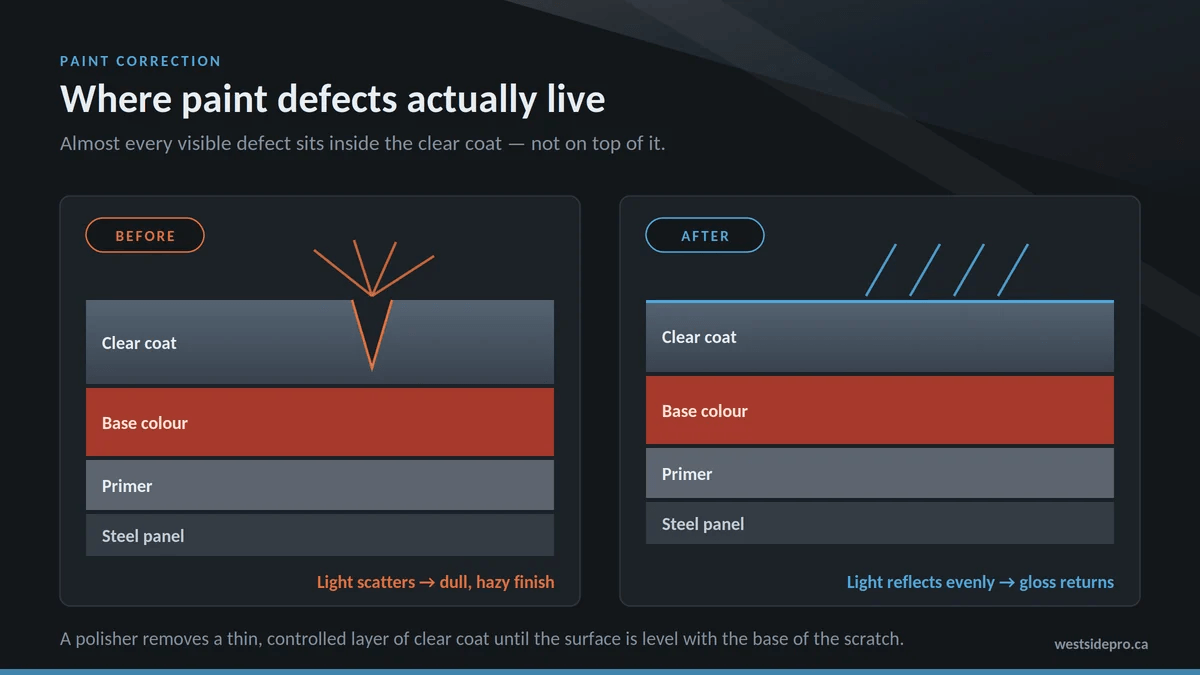
Paint correction is the mechanical removal of surface imperfections from a vehicle’s clear coat using professional-grade machine polishers, cutting compounds and finishing pads.
Here is the part most car owners miss: your paint is built in layers of primer, base colour, and a transparent clear coat on top. Almost every defect you can see lives in that clear coat. A polisher removes an extremely thin, controlled layer of it, which levels the surrounding surface down to the base of the scratch. Once the surface is level again, light reflects evenly instead of scattering and the defect visually disappears because it is physically gone.
That is the difference between correcting paint and covering it up.
Paint Defects Correction Removes
- Swirl marks fine circular scratches from improper washing, dirty towels, or automatic car washes
- Light to moderate scratches and scuff marks from everyday use
- Oxidation chalky, faded paint caused by prolonged UV exposure
- Etching marks burned in by bird droppings, tree sap and acid rain
- Water spots mineral deposits that stay visible after drying
- Micro-marring and haze the dull, cloudy look left behind by poor polishing or brush washes
- Buffer trails holograms left by inexperienced detailing work
If a defect has cut through the clear coat and into the base colour or primer, correction cannot fix it. Those cases need touch-up paint or a respray and an honest detailer will tell you that upfront rather than buffing away clear coats for nothing.
Paint Correction vs. Polishing vs. Waxing: What’s Actually Different
These three terms get used interchangeably, and that confusion costs car owners money. They do completely different jobs.
|
Paint Correction |
Polishing |
Waxing / Sealing |
|
|---|---|---|---|
|
What it does |
Removes defects from the paint |
Enhances gloss on existing paint |
Adds a protective top layer |
|
Method |
Multi-stage compounding and refining |
Single-stage shine enhancement |
Wipe-on protection product |
|
Effect on scratches |
Physically removes them |
Softens or temporarily hides them |
Fills them briefly, then washes out |
|
Result |
Restores true paint clarity |
Adds temporary gloss |
Adds shine and protection, no repair |
|
Longevity |
Permanent, until new damage |
Short-term |
Weeks to months |
The simple version: polishing and waxing improve how your paint looks right now. Paint correction repairs what is actually wrong with it. If you want defects gone rather than disguised, correction is the only option and it should always come before any ceramic coating or sealant, so you are not permanently locking flaws underneath a protective layer.
How the Paint Correction Process Works
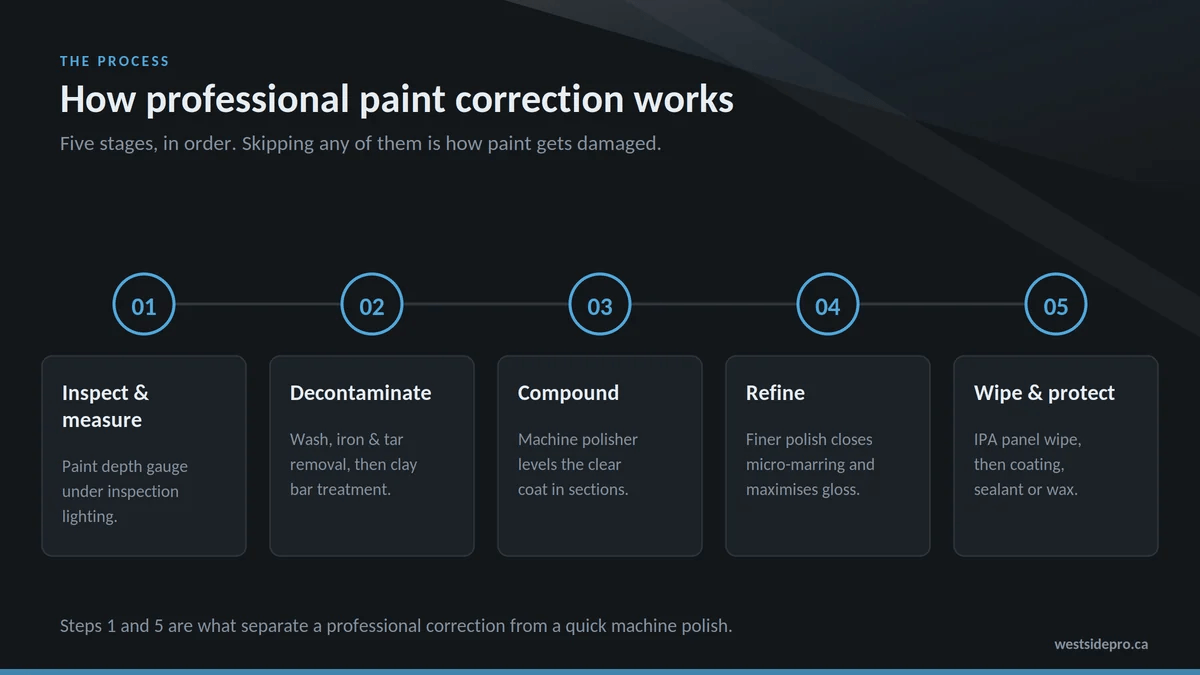
A proper correction is methodical. Skipping steps is how paint gets damaged, so here is what a professional job looks like from start to finish.
Step 1: Inspection and Paint Depth Assessment
The vehicle is examined under dedicated inspection lighting, which exposes swirls and holograms that daylight hides completely. A paint depth gauge measures how much clear coat is available to work with.
This step decides everything that follows how aggressive the correction can safely be, how many stages it needs, and whether any panels have been repainted previously and require a gentler approach.
Step 2: Deep Cleaning and Decontamination
The car receives a thorough wash, followed by chemical decontamination to dissolve iron fallout and tar, then a clay bar treatment to pull embedded particles out of the paint.
This stage is non-negotiable. Any contaminant left on the surface will be dragged across the paint by the polishing pad, adding fresh scratches while you are trying to remove old ones.
Step 3: Machine Compounding (The Cutting Stage)
This is where defects are removed. Using a machine polisher with a cutting compound and appropriate pad, the detailer levels the clear coat in small, controlled sections.
Pad and compound combinations are tested on a small area first to find the least aggressive setup that still clears the defects; the goal is always to remove the minimum clear coat necessary.
Step 4: Refinement Polishing
Compounding removes defects but leaves behind micro-marring of its own. A finer polish and softer pad refine the surface, closing up those micro-scratches and maximising reflectivity.
This is the stage that separates a clean, glassy finish from a hazy one, and it is often the step budget operations skip.
Step 5: Panel Wipe and Protection
The paint is wiped with an IPA solution to strip away polishing oils, which confirms the correction is genuine and not just oils temporarily filling defects. A final inspection follows.
Protection is then applied a ceramic coating, sealant or wax to lock in the result and shield the freshly exposed clear coat from future contamination.
How Paint Correction Restores Shine and Smoothness
Two things change dramatically after correction, and both come down to physics rather than product.
Gloss and colour depth. Damaged paint scatters light in every direction, which your eye reads as dull, flat or faded. A level surface reflects light uniformly, producing sharp reflections and a mirror-like finish. This is why corrected black paint looks liquid and corrected red looks genuinely deep rather than pink and tired; the colour was always there, buried under a scratched-up clear coat.
Silky-smooth texture. Run your hand across contaminated paint and it feels gritty, like fine sandpaper. After decontamination and correction, that roughness is gone entirely. The surface feels slick and glass-like and that smoothness is functional too: dirt and water bond less easily to a smooth surface, so the car stays cleaner between washes.
Signs Your Car Needs Paint Correction
Not sure whether your vehicle is a candidate? Look for these:
- The paint looks dull, hazy or faded even right after a wash
- Circular swirl marks appear under direct sunlight or LED lighting
- The surface feels rough or gritty to the touch after washing
- You can see scratches, scuffs or etching from bird droppings and tree sap
- Water spots remain visible after drying and won’t wipe away
- Reflections look blurry or distorted rather than sharp
- Your car is a few years old and has been through automatic car washes
A quick at-home test: wash and dry a panel, then slide your hand inside a thin plastic bag across the paint. If it feels rough or catches, your paint is contaminated and would benefit from decontamination and correction.
If several of these apply, book an inspection with a paint correction specialist in Oakville. Most owners are genuinely surprised by how much gloss their paint can recover.
Paint Correction Stages and How Long Each Takes
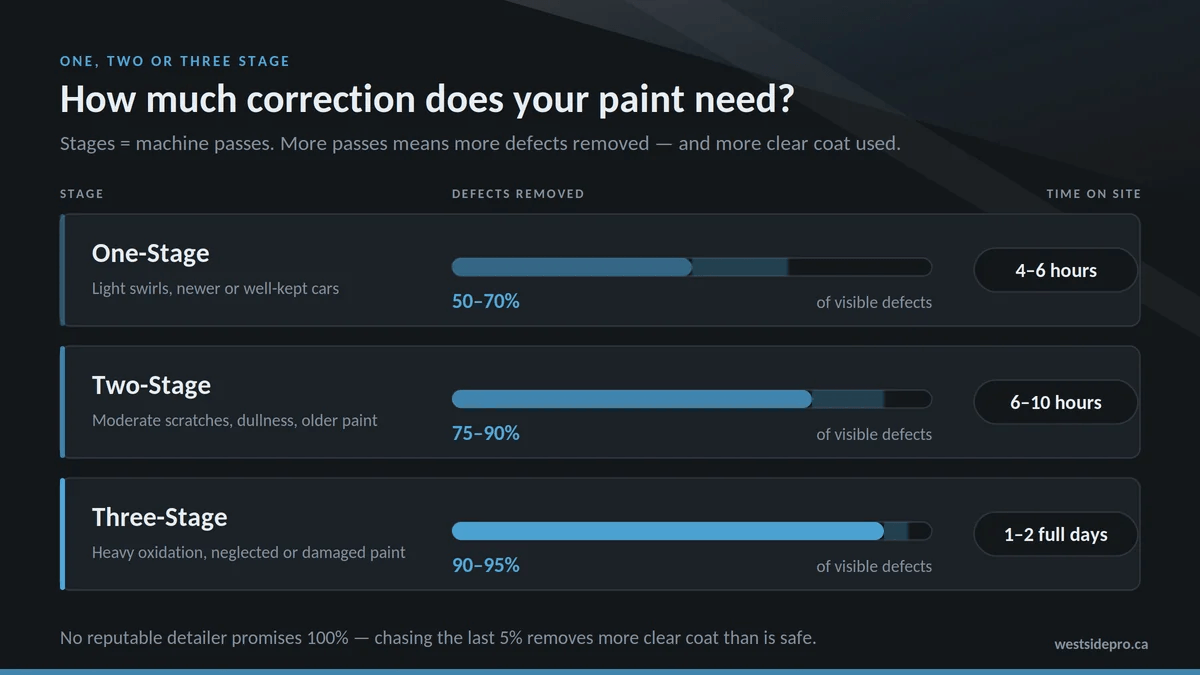
Correction is priced and scheduled by stages how many machine passes the paint needs.
|
Stage |
Best For |
Defect Removal |
Typical Time |
|---|---|---|---|
|
One-Stage |
Light swirls, newer or well-kept cars |
50–70% |
4–6 hours |
|
Two-Stage |
Moderate scratches, dullness, older paint |
75–90% |
6–10 hours |
|
Three-Stage |
Heavy oxidation, neglected or severely damaged paint |
90–95% |
1–2 full days |
A word on expectations: no reputable detailer promises 100% defect removal. Chasing that last 5% means removing a more clear coat than is safe, which shortens the life of your paint permanently. A skilled detailer balances results against how much clear coat your car can afford to lose.
How Much Does Paint Correction Cost in Oakville?
Professional paint correction in Oakville typically ranges from $300 to $800, with pricing driven by four factors:
- Vehicle size a compact sedan takes far less time than a three-row SUV or pickup
- Paint condition heavier defects require more stages and more hours
- Number of stages one-stage jobs sit at the lower end, three-stage at the top
- Paint hardness some finishes, certain German and Japanese clear coats especially, are significantly harder to correct
Compare that with the alternative: a professional respray on a single panel often exceeds the cost of correcting the entire vehicle. For paint that is damaged but not compromised, correction is the far more economical route.
Most owners pair correction with a ceramic coating, which is the smartest sequencing you protect the finish at its best rather than sealing defects underneath.
Is Paint Correction Worth It?
For most Oakville drivers, yes. Here’s what you actually get:
- Higher resale value. Paint condition is one of the first things a buyer or dealer assesses. A flawless, glossy finish signals a well-maintained vehicle and directly supports a stronger asking price.
- Restored depth and clarity. Years of dullness, haze and fading reverse in a single service.
- A proper foundation for protection. Ceramic coatings bond best to corrected paint, and they lock in whatever is underneath so correcting first is what makes the coating worth its cost.
- A cheaper alternative to repainting. Correction restores like-new appearance without the expense, colour-matching risk or resale disclosure of a respray.
- Easier maintenance. Smooth, protected paint repels dirt and water, so washes are faster and less frequent.
For cars facing Ontario winters, road salt and summer UV year after year, that combination of appearance, protection and resale value makes correction a genuinely sound investment rather than a cosmetic indulgence.
How to Maintain Your Car After Paint Correction
Correction removes the clear coat, and the clear coat does not grow back. Protecting the result is what makes the investment last.
- Use the two-bucket wash method with clean microfibre wash mitts one bucket for soap, one for rinsing, both with grit guards
- Choose pH-balanced car shampoo, never dish soap, which strips protection and dries out the clear coat
- Avoid automatic car washes entirely. Spinning brushes are the single biggest cause of swirl marks. Touchless is acceptable in a pinch; brushes are not
- Dry with clean, plush microfibre towels or filtered forced air never a chamois dragged across dry paint
- Apply a ceramic coating or sealant and maintain it on schedule for lasting protection
- Remove bird droppings, sap and salt immediately these etch into clear coat within hours in summer heat
- Park in shade or a garage where possible to limit UV exposure
- Rinse road salt off through the winter, even in cold weather, to prevent buildup and corrosion
With consistent care, corrected paint holds its gloss for years and your next correction, when it eventually comes, will be a lighter, cheaper one-stage job rather than a full multi-stage restoration.
Restore Your Car’s Finish with Westside Pro
Paint correction isn’t just about a polished look, it’s about recovering the depth, clarity and shine your vehicle had the day you bought it. Sunlight, road grit, salt and harsh weather all wear that finish down, and no wash or wax will bring it back on its own.
If your vehicle has lost its sparkle, book a professional auto detailing and paint correction service in Oakville with Westside Pro. You’ll get proper inspection, premium-grade products, and correction techniques that respect your clear coat while delivering results you can see from across the parking lot.
Give your car the finish it deserves, one that looks as flawless on the road as it did in the showroom.
Frequently Asked Questions
How much does paint correction cost in Oakville?
Professional paint correction in Oakville generally ranges from $300 to $800. The final price depends on your vehicle’s size, its paint condition, and how many correction stages are required.
Can paint correction remove deep scratches?
It removes light to moderate scratches that sit within the clear coat. If a scratch has reached the base colour or primer the fingernail test is a good indicator, if your nail catches in it, it’s likely too deep it needs touch-up paint or a respray instead.
How often should I get paint correction done?
Most vehicles benefit from correction every two to three years, though this varies with how the car is washed, stored and driven. Well-maintained, ceramic-coated cars can go considerably longer.
Is paint correction safe for all cars?
Yes, when performed by trained professionals using paint depth gauges and appropriate technique. Because correction removes a thin layer of clear coat, the number of times it can safely be repeated is limited which is why measurement and restraint matter more than aggressive cutting.
Should I get paint correction before a ceramic coating?
Always. A ceramic coating seals in whatever is underneath it, including every swirl and scratch. Correcting first is what allows the coating to deliver the gloss and clarity you’re paying for.
How long does paint correction last?
The correction itself is permanent; those defects are physically gone. How long the finish stays flawless depends entirely on aftercare. With proper washing and a ceramic coating, results hold for years; with automatic car washes, swirls return within months.
What’s the difference between paint correction and paint protection film?
Correction repairs existing damage in your clear coat. Paint protection film is a physical layer applied over the paint to prevent future rock chips and scratches. Many owners do both: correct first, then protect.